Introduction
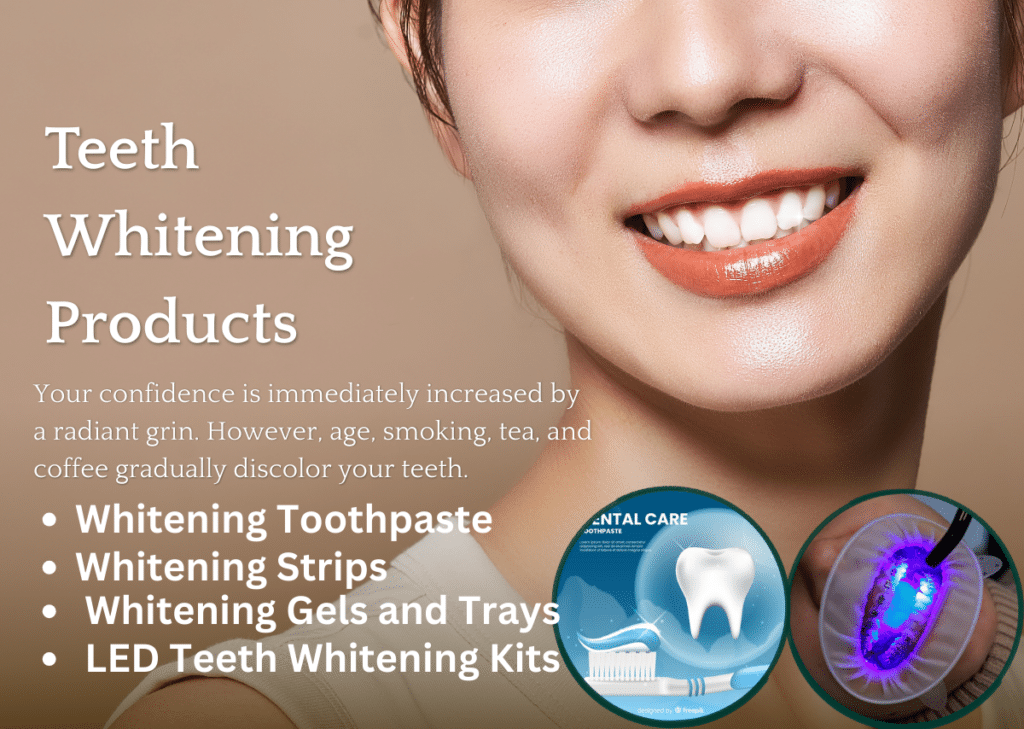
Your confidence is immediately increased by a radiant grin. However, age, smoking, tea, and coffee gradually discolor your teeth. You’re not the only one who has observed dull or fading enamel. Every year, millions of individuals look for Teeth Whitening Products solutions that work.
More effective and safer than ever are the whitening treatments of today. You now have a variety of alternatives, ranging from professional gels and toothpaste to whitening strips and LED kits. However, picking the best one might be difficult. Some products guarantee results right away. Others concentrate on less sensitive, gradual whitening.
The operation ofTeeth Whitening Products is described in this handbook. Ingredients, efficacy, safety, and how to pick the best alternative for your requirements will all be covered. This article offers you useful, evidence-based advice regardless of your level of experience with at-home teeth whitening or your consideration of professional treatment. Together, we can securely and confidently assist you get a brighter smile.
Understanding Teeth Whitening Products
- The purpose of teeth-whitening solutions is to lighten the color of teeth and eliminate stains. Extrinsic and intrinsic stains are the two primary forms of discoloration that they target.
The exterior enamel is impacted by extrinsic stains. They are typically brought on by smoke, alcohol, and food. Using over-the-counter whitening treatments makes it simpler to get rid of them.
The tooth’s internal structure is where intrinsic stains appear. They might be brought on by trauma, drugs, or age. Stronger whitening solutions or expert care are frequently needed for these.
Active bleaching chemicals are present in the majority of whitening products. The two most typical ones are:
- Hydrogen peroxide
- Carbamide peroxide
Stain molecules are broken down by these chemicals. They oxidize discolored particles after penetrating the enamel. Teeth seem brighter and whiter as an effect.
Types of Teeth Whitening Products
Teeth whitening products fall into a number of different kinds. Each has unique advantages, degrees of simplicity, and outcomes.
Whitening Toothpaste
The easiest solution is whitening toothpaste. It removes surface stains with polishing chemicals and light abrasives.
Low levels of peroxide are also included in certain formulations. But toothpaste mostly removes external stains.
Benefits:
• Simple to use on a regular basis
• Reasonably priced
• Minimal chance of sensitivity
Restrictions:
• Does not significantly alter the color of teeth
• The effects take time to manifest.
For cleaning, whitening toothpaste is the best option. Following professional whitening, it helps maintain the effects.
Whitening Strips
Whitening strips are peroxide gel-coated, thin plastic strips. For a certain amount of time, you apply them straight to your teeth.
They are well-liked because they strike a balance between price and efficiency. In one to two weeks, the majority of products start to show results.
Benefits:
• Easy to use and discrete
• A visible whitening result
• Easily accessible
Drawbacks:
• Could result in temporary tooth sensitivity
• Not every tooth will fit the strips perfectly.
Mild to moderate stains can be removed with whitening strips.
Whitening Gels and Trays
These kits come with a tray that fits over your teeth and whitening gel. Some can be altered. Some are already full.
Hydrogen peroxide or carbamide peroxide are often included in the gel. Whether a product is prescribed by a dentist or purchased over-the-counter affects the amount present.
Principal advantages:
• Greater uniform coverage
• Greater potential for whitening
• Adequate for mild yellowing
Potential disadvantages:
• A greater risk of sensitivity
• Needs to be used carefully
A dentist’s custom trays frequently produce better outcomes and less gum discomfort.
LED Teeth Whitening Kits
Blue light technology and peroxide gel are used in LED whitening kits. The purpose of the light is to hasten the whitening procedure.
Due to at-home convenience and social media trends, these kits have become more and more popular.
Advantages:
• The findings that are noticeable sooner
• Up to date and easy to use
• Good for a lot of users
Cons:
• The quality of the product affects the results.
• Excessive usage might make you more sensitive.
LED kits have the potential to be useful. On the other hand, pick goods from reliable companies that clearly identify their ingredients.
Professional Whitening Treatments
A dental clinic is where professional Teeth Whitening Products is done. Under carefully monitored circumstances, dentists employ bleaching chemicals at greater quantities.
In a single session, in-office treatments frequently provide striking improvements. Dentists also keep an eye on enamel safety and gum health.
Benefits:
- Strong and immediate results
- Customized treatment
- Professional supervision
Drawbacks:
- Higher cost
- Possible temporary sensitivity
If you have inherent discolouration or severe stains, professional whitening can be your best bet.
Key Ingredients in Teeth Whitening Products
Understanding ingredients helps you make safe decisions.
Hydrogen Peroxide
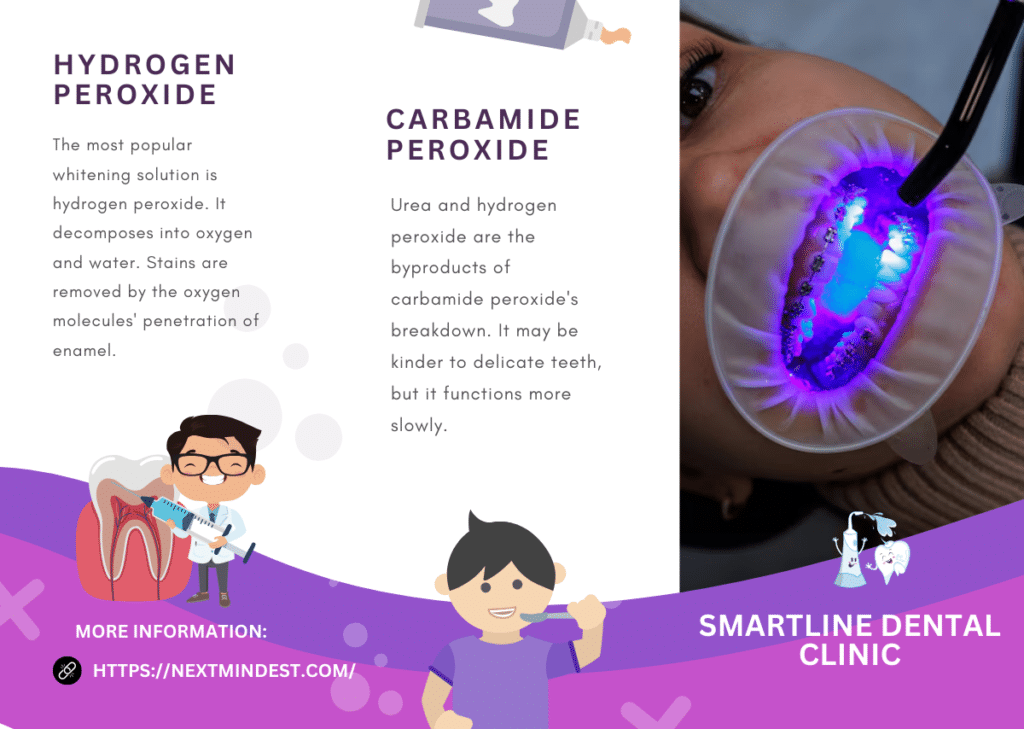
The most popular whitening solution is hydrogen peroxide. It decomposes into oxygen and water. Stains are removed by the oxygen molecules’ penetration of enamel.
Results are obtained more quickly at higher concentrations. But they also raise the possibility of sensitivity.
Carbamide Peroxide
Urea and hydrogen peroxide are the byproducts of carbamide peroxide’s breakdown. It may be kinder to delicate teeth, but it functions more slowly.
Take-home dental trays frequently employ it.
Abrasive Agents
Surface stains can be removed with the use of ingredients like silica. Whitening toothpaste contains these.
Even if it works, too much abrasiveness might damage enamel. Select goods with ratings for safe enamel.
Are Teeth Whitening Products Safe?
The majority of teeth-whitening solutions are safe when used properly. But abuse can have negative consequences.
Common side effects include:
- Tooth sensitivity
- Gum irritation
- Temporary enamel dehydration
To lower the risks:
• Pay close attention to the package instructions.
• Don’t use high-peroxide formulations excessively.
• If necessary, apply desensitizing toothpaste.
• If you have cavities or gum disease, see a dentist.
Children under 16 should not use Teeth Whitening Products. Before using, those who are nursing or pregnant should consult a specialist.
How to Choose the Best Teeth Whitening Products
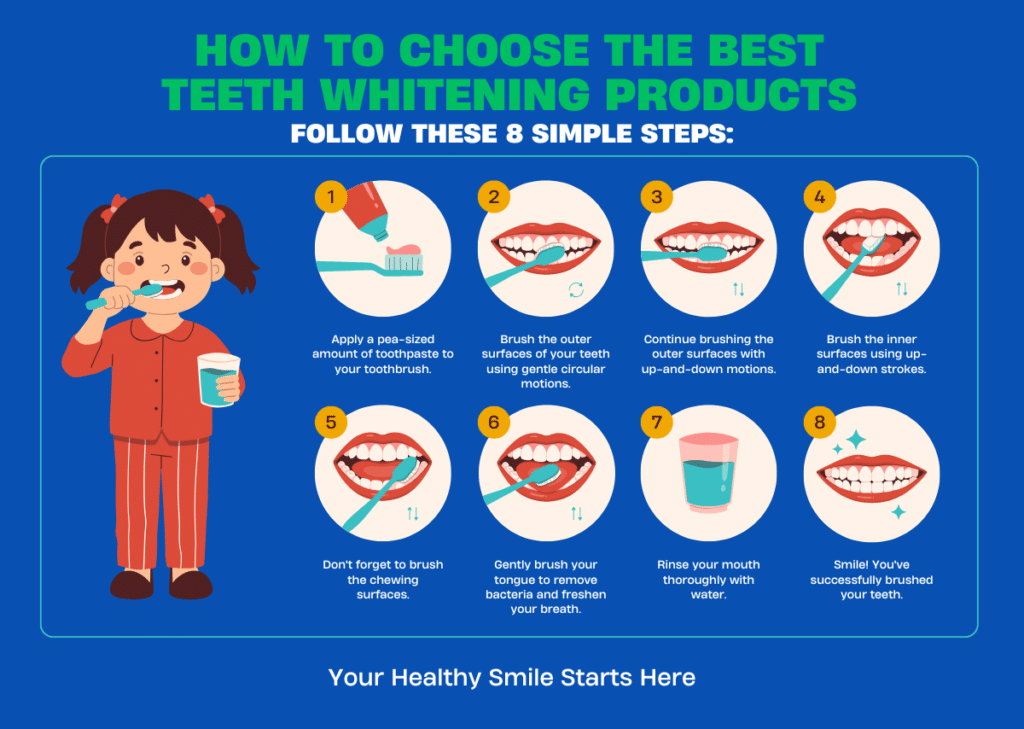
Your objectives and dental health status will determine which product is best for you.
Consider this:
• Do you like quick or gradual results?
• Are your teeth sensitive?
• How serious is your staining?
• What is your spending limit?
Regarding minor stains:
• Whitening strips or toothpaste can be sufficient.
Regarding mild stains:
• LED kits or whitening trays may produce better outcomes.
Regarding deep inherent stains:
• Professional teeth whitening works better.
Always verify the brand’s repute and ingredient concentration. Steer careful of goods with confusing labels or false claims.
Tips to Maintain Whitened Teeth
Whitening is temporary. The longevity of outcomes is influenced by lifestyle choices.
Observe these upkeep guidelines:
Limit your intake of red wine, tea, and coffee.
• Give up smoking. Brush twice a day.
• Floss often
• For upkeep, use whitening toothpaste.
Make an appointment for routine dental cleanings.
Little everyday routines have a significant impact. Your investment in Teeth Whitening Products is also preserved when enamel is protected.
Conclusion: Teeth Whitening Products
Teeth Whitening Products for teeth whitening provide workable ways to get a whiter smile. You have a variety of solutions to suit your needs, ranging from toothpaste and strips to LED kits and expert treatments.
You can make safer decisions if you know how whitening agents operate. The two most effective components are still hydrogen peroxide and carbamide peroxide. To prevent sensitivity and gum irritation, however, appropriate usage is necessary.
Over-the-counter treatments could be effective if you’re looking for a minor improvement. Stronger results are obtained with expert treatment for deeper stains. Always put dental health before immediate cosmetic improvements.
Making wise choices is the first step to a confident grin. Make informed decisions, pay close attention to directions, and practice proper oral hygiene. You may have healthier-looking teeth and long-lasting whitening effects with the correct method.
FAQs: About Teeth Whitening Products
1. How long does it take for teeth-whitening products to start working?
Within 7–14 days, the majority of over-the-counter products start to show results. One session of professional therapy may provide benefits.
2. Does enamel get damaged by teeth-whitening products?
Approved whitening treatments don’t permanently harm enamel when used properly. Temporary sensitivity may result from abuse or overuse.
3. Are LED kits or whitening strips superior?
Both have the potential to be successful. Strips are inexpensive and easy to use. Depending on the quality of the goods, LED kits may speed up results.
4. Can whitening products be used on sensitive teeth?
Yes, but pick products made for sensitive teeth or low-peroxide compositions. If the sensitivity continues, see a dentist.
5. How long do the effects ofTeeth Whitening Products last?
Usually, results endure between six months and two years. Diet, dental health, and lifestyle choices all affect longevity.