
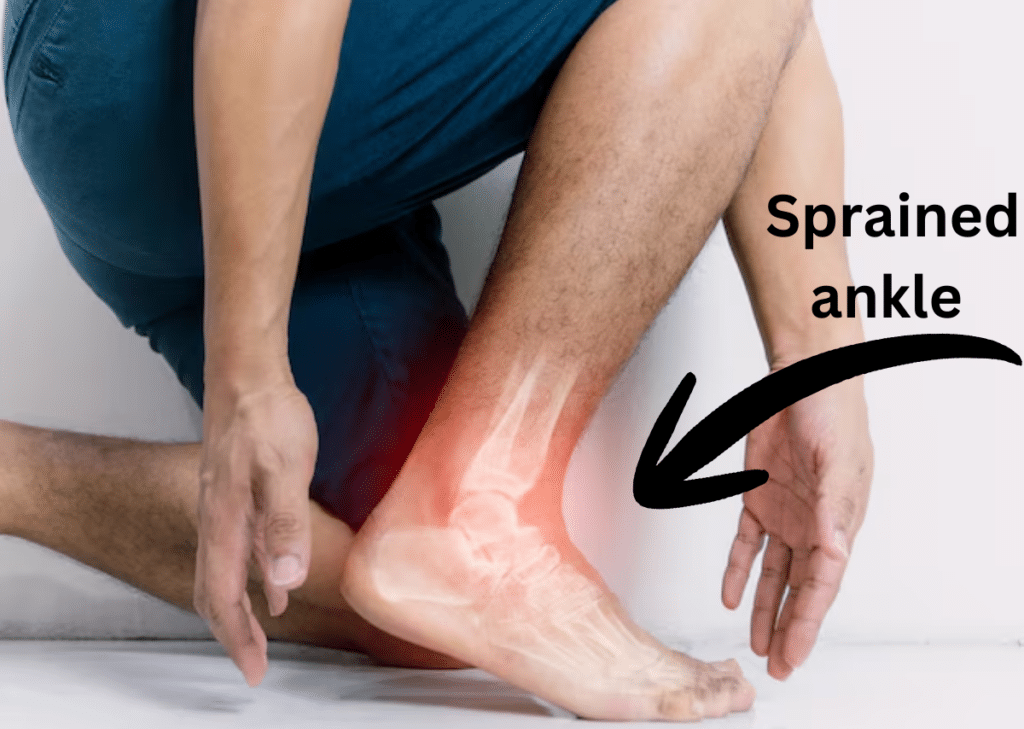
Meta Description: Know how to provide sprained ankle self-care, fast-tracking the healing. Professional advice about RICE therapy, exercises and the time when ankle sprains require medical intervention.
Introduction: Sprained ankle self-care
You have sprained an ankle and as you take every step you get sore remembering that you got hurt. Your sprained ankle may have been rolled when you went out jogging in the morning, it may have slipped a step on the staircase, or fallen in an un-athletic manner on the sports field, but at any rate will put you into a state of confusion and make you live with no answers to your new problem.

The positive aspect is that most of them are completely healed in several weeks when there is appropriate attention to the sprained ankle. This is because once it is possible to get it right within the first hours and days after an injury. The human body can do much to heal itself but it needs your help which can be obtained by means of appropriate combination of rest, treatment and gradual rehabilitation.
It is a self care manuel that will give you the right directions on how to go about self-care efficiently, which would reduce swelling, pain management, and accelerate the healing process. One of the things you will find is evidence-based approaches that physical therapists use, which you can effectively treat at home, and when you need to enlist the services of the professional medical caregiver.
You are ready to be the head of your recovery? We will take a glance at the greatly required measures, which would ensure your safety and success in getting back on your feet.
The Basics of Ankle Sprains and the Importance of Self-Care
Ankle sprain is a disorder where your ankle has ligaments which are unable to stretch away or break apart. They are hard connective tissues that cement bones and provide the stability to the process of movement.
Sprain Severity Levels:
Grade I: Minor case, System is free and the heals after 1-2 weeks.
Grade II: Particular tears, will require 3-6 weeks.
Grade III: total, needs 6-12 weeks and above.
Common Symptoms to Monitor:
- Swelling Minutes to hours after trauma. The deterioration of pain on movement or weight bearing is one of the characteristics.
- Bruising that may either be observed immediately or days after the traumatic event.
- Reduced ankle mobility and ankle lack of rotation.
Self-care directly influences recovery rates as well as gets rid of chronic instability or recurrent injuries.
How to use the RICE Method: Your Personal Firewall
RICE is an acronym of rest, ice, compression, and elevation which is the gold standard of primary self-care of sprained ankle. Optimum performance is achieved on starting.
Rest -Splint Your Broken Ankle
No weight during 24 to 48 hours.
- Keep the joint in no weight by the use of crutches when needed.
- Avoid painful/ unpleasant activities.
- Ensure that turning around can be done easily and without pain so as not to stiffen.

Ice -Rein in Inflammation
Ice packs are to be administered in 15-20 minutes intervals after every 2-3 hours.
- Use a small towel cover- do not ever touch any ice on the skin.
- Continue for the first 48-72 hours
Crushed ice, ice packs or frozen vegetable bags may be used.
Compression -Reduce Swelling
- Elastic bandage upwards.
- Apply hard pressure without complication or cessation of circulation.
- Discover numbness or tingling (it is too tight)
- Take off compression wraps at night in order to allow the skin to breathe.
Elevation -Take Advantage of Gravity to heal

Maintain position of ankle above the heart where possible.
- Just sit on pillows when you are sitting or lying.
- In specific, within first 48-72 hours.
- Its benefits are enhanced by combination with ice therapy.
- Pain Management Strategies
Over-the-Counter Medications:
- NSAIDs like ibuprofen are to be employed in the treatment of inflammation and pain.
- Painkiller, non-anti-inflammatory acetaminophen.
- Accurately receive instructions of dosages.
- Take food to prevent stomach irritation.
Alternative Relief Measures (Post 48 -72 Hours):
- Warm compresses: warm compresses stimulate the flow of blood and accelerate the healing.
- Light massaging of the affected area of injury reduces tension in the muscles.
- Menthol/capsaicin topical analgesic cream.
- Deep breathing and meditation-based pain management.
- Progressive Rehabilitation exercises.
These should start with mild exercises once the pain and swelling are gone. The early recovery members are supposed to be steady as opposed to extreme.
Range-of-Motion Exercises (Day 3- 7)
- Alphabet exercises: With big toe, make / write letters in the air.
- Ankle circles: 10 clockwise, 10 anti Clockwise, sometimes a great many times a day.
- Soles flexes and toe points: Be in both positions 5 seconds.
- Stop, in case you feel sharp pain.
This step consists of building on the exercises previously performed during the first week and reinforcing them as time progresses.
- Resistance band exercises: Push and everything.
- Heel raises: feet and then one.
- Balance exercises: Standing on a foot in 30+ seconds.
- Toe and heel walk: 20-20 steps with each, repeat the steps several times.
The reason behind this is that exercises must be resumed once one gets back on his feet to prevent re-injury.
- Faster Healing through nutrition.
- There are also specific nutrients that your body needs and that will aid in the process of repairing tissues and worn out ligaments.
Key Nutrients for Recovery:
- Protein: The substances of construction of the tissue.
- OMG fatty acids: Inflation suppressors (flaxseeds, walnuts, fish)
- Vitamin C: vitamin C is used in the synthesis of collagen (citrus fruits, berries and leafy vegetables)
- The same is also applicable to zinc, which helps wounds to heal (lean meats, beans, nuts).
- 20-30 mg of Vitamin D and calcium: Strengthening bones.
Hydration and Diet Tips:
Take at least 8 glasses of water daily.
- Inclusions Fruits and vegetables that are colored as antioxidants.
- Do not consume too much alcohol and processed foods.
One of such strategies that ought to be adopted to help in natural healing is being anti-inflammatory food.
Understanding When to See a Medical Pro-Help
You are not afraid to seek the services of a medical practitioner in case you contract:
The red flags that the medical practitioners should observe include:
- So much pain that will not respond to RICE treatment.
- Unable to support weight in 48 hours.
- Cinematic deformity or deformed appearance of ankle.
Ego changes:
- Prospective nerve injury, numbness, or lack of sensation.
- No achievements in seven days of self-care.
Diagnostics Tests which might be necessary:
- X-rays to rule out fractures
- MRI of large tears of the ligaments.
- Sonography of the soft tissue.
- Stress tests to determine the stability of joints.
- How to Prevent ankle sprains in the future.
The following preventive care will minimize the chances of re-injury by approximately 50 percent:
Long-term strategies to be used to protect:
- Maintain exercises on full restoration.
- Wear shoes that have good arch support and also traction.
- Yes warm up 5-10minutes before the vigorous exercise.
- Proprioceptors at wobble board/ foam pad.
Lifestyle Adjustments:
- Be on guard to the pedestrials and hazards.
- Maintain normal body weight to rid joints of strain.
- Cross-train so as to develop well-rounded strength.
- Treat orthotics in case of orthomechanical issues.
Frequently asked questions: Sprained ankle self-care
1. How many days does it take on average to fully recuperate a sprained ankle?
Severity dictates the time of healing. Mild sprains were healed in 1-2 weeks, moderate sprains were healed in 3-6 weeks and severe sprains took 6-12 weeks or more with good treatment.
2. Can I walk on a Sprained ankle self-care?
The initial 24-48 hours are to be spent inactive. Use crutches if needed. Begin with a progressive progress of weight bearing with decreasing pain, but never exceed the presence of a substantial pain.
3. Should ankle be raised when sleeping?
Yes, sleeping increases descent the nocturnal swelling. During the night, the ankle must remain in the state of elevation (above the heart) on the pillows so as to get the best possible effects.
4. What is the difference between sprain and strain?
A sprain is a form of ligament injury (connecting the bones) and strains are a problem of the muscles or tendons (connecting the muscles to the bones). First of all, they require similar RICE treatment.
5. How do you know whether my sprained ankle is or not severe?
The pain which does not improve within 48 hours, complete inability to support weight, observable deformity, numbness or failure to improve within one week, indicates the necessity to visit a healthcare specialist.
Conclusion: Sprained ankle self-care
Self-treatment of sprained ankle is a mixture of short-term RICE treatment and gradual rehabilitation of a patient. By being timely, by taking pains well in control, and by following through with the exercises that you planned carefully, you give the most sensible chance to your ankle to fully recuperate.
Remember that it is a slow process of healing, you must be able to stick with the routine and track the signals of your body. Most of the people come back to normal mode of activities after a few weeks when the right measures are used.
Although the symptoms vanish, keep doing strengthening and balance exercise so as to go on maintaining the ankle healthy in the long run and avoid future injuries. Contact a doctor immediately in case of recovery stalling or any other concerning symptoms have been observed.