

General Motors has been in the news for announcing an increase in the production of pickup trucks. GM’s decision comes at an important time for the company and the entire automotive industry. Pickup trucks are easily the most popular vehicles in the U.S and this trend is expanding internationally.. This piece discusses the reasons for GM’s decision, the likely impact on the automotive industry, and how the change might impact consumers and manufacturers. The increased production of pickups by GM and its implications are best understood by considering the relevant facts.
Why is GM Increasing Pickup Production?
The Popularity of Pickup Trucks

In recent years, pickup trucks have emerged as one of the most sought after types of vehicles, especially in the U.S. Markets. The mix of utility, power, and modern technology provides for versatile vehicles, suitable for personal and commercial use. Latest industry reports indicate that, for the past few years, the pickup truck market is the overall automobile segment, particularly in North America. Due to the extensive demand, GM is planning to execute their business model to engage their company in competitive market gain.
GM’s Anticipation to Market Demand
GM knows that the pickup segment is one of the most competitive in the automotive business, mainly due to tight competition by the likes of Ford and Ram. GM has increased their output to meet the demand by the market for the Chevy Silverado and GMC Sierra. This increased output illustrates that GM is making dedicated attempts to fulfill the demand by the market, as well as ensuring their competitive advantage in the truck market.
Improving Operational Efficiency
Increasing pickup production is driven by more than just market demand; it also reflects an improvement in GM’s operational competency. Through production expansion and supply-chain efficiencies, GM intends to enhance profitability while minimizing production hold-ups, which have become a major issue in the automotive sector since the COVID-19 pandemic affected supply chains around the world.
GM Pickup Production Strategy
Investments in Technology and Manufacturing
Regarding the strategy for increasing the production of pickups, GM invests unparalleled resources in technological advancements and contemporary production methods. GM has pledged the construction of new, fully automated, and advanced robotic integrated flexible factories. With the automation investments, the company expects a decrease in completion times of the automation investments, for the pickups manufactured and delivered. GM expects the investments made in the automation technologies and flexible robotic factories will not harm the production and construction quality for which GM pickups are recognized.
Electrification Shift in Pickup Truck Production
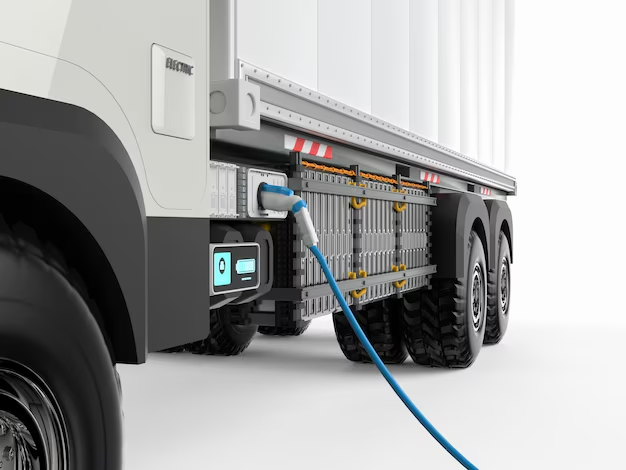
In appreciation of the new contemporary strategy directed at the production of electric pickups, advancements, and the production of the Chevrolet Silverado EV, GM has integrated the production of electric versions of its top-selling pickups. GM’s product diversification strategy aims to embrace eco-friendly consumer pickup truck demand. GM anticipates it will get eco-friendly consumer adoption and will align with the eco-friendly worldwide trends.
Sustainability and Supply Chain Challenges
GM continues to face challenges in making their productions more sustainable, and also making their strategies more sustainable. Some steps being taken are for example utilizing recycles materials and emissions mitigation, being more proactive in the sustainable approach to their supply chains still remains more strategic in nature. Issues like the chip shortage and increasing costs for materials are still going to create sustainability challenges for the company. On the other hand, the company remains poised to continue making strides to surround risks to production costs and pace, as reliance on local sourcing and manufacturing is on the rise.
Impact of GM’s Production Increase on Consumers
More Availability and Lower Prices
Increased production at GM is likely to mean more Chevrolet Silverados, GMC Sierras, and electric alternatives for consumers. This could also lead to more aggressive pricing, as GM tries to maximize its market share. For consumers interested in both traditional and electric pickup trucks, lower prices and more readily available options are certainly helpful.
Quality and Innovation
An increase in production levels also communicates GM’s intention to keep its focus on the expansion of quality and innovation. For consumers, not only will the company’s pickup trucks become more attainable, but they will also include fuel saving technology and improvements in ease of operation and usability through innovations in technology. GM is committed to ensuring their trucks are equipped with the latest technology, whether that means more powerful engines or advanced driver assistance systems (ADAS).
GM Pickup Production Increase: Industry Reactions
Impact on Competitors
Competitors such as Ford, Ram, and Toyota are likely to upgrade their truck offerings as GM expands pickup truck production. For decades Ford’s F-series and Ram 1500 have been primary competitors to GM’s Silverado and Sierra. Increased competition within this segment of the pickup market will likely drive enhancements to products and features, benefitting consumers. On the other hand, there is the risk of competitors engaging in market power abuse such as dumping to undermine industry profitability.
The Future of Electric Pickups
The rise of GM in the pickup market also has consequences for the increasing demand for Electric Vehicles. Competing against the Ford Lightning, the Chevrolet Silverado EV has also entered the race for electric pickups. The market is now shifting to competition for electric trucks. GM’s recent focus on manufacturing electric pickup trucks clearly demonstrates the company’s goal on the centrality of EVs to the future of the automotive industry. This shift is expected to spur the broader industry to develop more electric pick up options, including those from GM’s competitors.
Challenges and Risks for GM in Pickup Production
Supply Chain Issues
Increasing production of pickup vehicles presents GM with considerable supply chain difficulties. The production schedules of automotive companies have been disrupted by the pandemic and ongoing shortages of semiconductors. Although GM is attempting to rectify the domestic and global supply chain issues, the unpredictable nature of the global supply chain will still pose difficulties with the company’s production goals and delivery timelines.
Labor and Workforce Challenges
Boosting production capacity will mean GM will have to prepare its workforce to meet the new demands. GM will continue to have challenges around recruiting, training, and retaining employees because of workforce shortages and changing requirements of the automotive industry. Addressing these challenges will need to be prioritized if GM intends to put its planned production increase strategies into action.

FAQs About GM Pickup Production Increase
What is the reason behind GM’s rise in pickup production?
GM has increased production to respond to consumer demand, operational efficiencies, and increased production to stay competitive with Ford and Ram.
How does GM’s increased pickup production benefit the consumer?
The consumer benefits from GM’s increased production by the improved availability of GM pickup trucks, improved feature sets which are offered at a more competitive price.
What type of pickups is GM focusing on?
GM has increased production of legacy internal combustion engine pickups such as the Chevrolet Silverado and GMC Sierra and is focusing on the newer electric pickups which include the Chevrolet Silverado EV.
What is the likely outcome of GM’s increased production on the market for trucks?
GM’s increased production of pickups is likely to lead to lower prices and increased availability. More competition will result from the increased production, which will benefit the consumer on all accounts. The increased production will place more pressure on the automakers to sustain innovation.
What are the constraints GM is facing to increase production?
GM is trying to increase production while supply chain issues, the cost of raw materials, and labor availability remain industry dominant constraints.
Will GM’s strategy influence the electric vehicle market?
Yes. GM has helped the growing electric vehicle market by producing more electric pickups, including the Chevrolet Silverado EV. This has also enhanced competition in the electric truck market.
Conclusion:
Increasing pickup production at GM is a response to demand over the last 3 years while keeping competitive in the traditional and EV pickup truck markets. Increasingly confident investments in the technologies, manufacturing efficiencies, and the sustainability of the company’s production activities suggests that GM is serious about their place in the future of automotive production. Undoubtedly, GM will face challenges that include disruptions in the order fulfillment supply chain and shortages of production labor at their assembly plants. These will define the effectiveness of the company’s increase in production strategy over time.
As production pickup production goes up, the demand and order fulfillment gap for reliable, high-performance trucks will the quantify the adjustments and expansions in GM’s adaptive production strategy integration. High truck production will provide GM with the opportunity to improve their innovative manufacturing and adaptive production strategies while improving their responsive and responsible production strategies.