Meta Description: Learn effective gingival recession self-care tips to prevent gum recession. Discover lifestyle habits, treatments, and techniques to protect your gums and improve oral health.
What is Gingival Recession? Understanding the Issue
Gingival recession is the process whereby your gums have been shrinking around your teeth leaving the roots of the teeth bare. This might appear as a small cosmetic problem, but when unattended, it may cause some sensitivity of the teeth, tooth decay, and even tooth loss. You can have longer looking teeth or you might have sensitivity to hot and cold food.
Gum care is very important and the good news is that through the correct self-care measures you can control and even prevent gingival recession. Regardless of whether you are new to that subject or have been battling this condition a while, this guide will take you through some of the key self-care methods, lifestyle modifications, professional therapies, and so on, which will help in safeguarding and repairing your gums.

Gingival Recession Self-Care: Protect Your Gums with These Tips
It is important to stop or treat gingivial recession through self-care. The following are the primary self-care actionable points that you can start to undertake now in order to assist in improving your gum health and prevent the further recession of your gums.
Causes of Gingival Recession: Why It Happens
The first step to effective prevention of gingivitis is the understanding of why gingival recession is committed. This is a prevalent dental complication that is caused by a number of factors.
Aggressive Brushing Techniques
It may lead to irritation of the gums and weakening of the gums in the long run by using a hard-bristled toothbrush or excessive force during brushing. Aggressive brushing can slowly brush your gums back.
Gum Disease
Oral poor health results in accumulation of plaque at the gum line. This build up may result into gum disease, which may cause gum recession in case it is not addressed.
Genetics

There are individuals who have a genetic tendency to recession of the gums. In case gum problems are a family problem, then you might have to be extra sensitive to the health of your gums.
Hormonal Changes
The gums increase their sensitivity and tend to recede during hormonal changes particularly in pregnancy, menopause or during puberty.
Essential Gingival Recession Self-Care Tips
Healthy oral management practices can be used to prevent and manage gingival recession. These are the ways of how you may take good care of your gums:
Wipe Your teeth with a Soft- Bristled Toothbrush
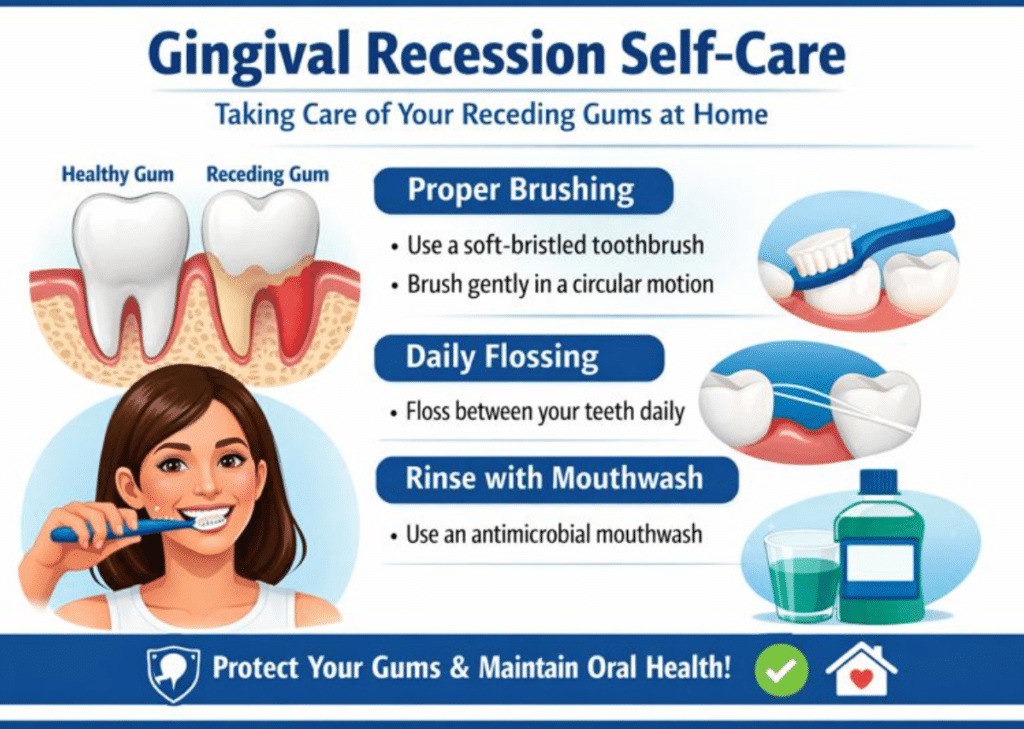
This is one of the easiest methods of preserving your gums by the use of a soft-bristled toothbrush. Brush softly by using circular movements so as not to harm the gums. Do not use hard-bristled brushes because they may make your gums to recede at a quicker pace.
Floss Daily
Flossing plays a vital role in the cleaning of the plaque between your teeth and the gum. Flossing routine helps in minimizing the chances of gum disease which may give rise to recession.
Antibacterial Mouthwash
Mouthwash that contains antibacterial properties is also beneficial since it allows you to maintain the health of your gums by killing bad bacteria, which causes plaque accumulation. Select mouthwashes that will not irritate the gum.
Regular Dental Checkups

It is important to visit your dentist regularly in order to identify the initial gum recession. Dental checks also assist in the removal of plaque that you might not have removed during brushing and your dentist will be able to advise you on how to take better care of your teeth.
Lifestyle Changes for Better Gum Health
In addition to brushing and flossing, lifestyle is also a matter of concern when it comes to the prevention of gingival recession. The following are some of the modifications that you can do to ensure that your gums are healthy:
Quit Smoking
Smoking impairs the blood supply to your gums which become exposed to infection and recession. To maintain a healthy gum, cessation of smoking may help a lot and reduce the occurrence of gum disease.
Eat a Gum-Healthy Diet
Proper diet consist of balanced diet that contains high levels of vitamins particularly Vitamin C is necessary to keep the gums strong. Leafy greens, citrus fruits, nuts are some of the foods that contain gum promoting nutrients.
Manage Stress
Stress may suppress your immune system such that your body will find it difficult to eliminate infections such as gum disease. To maintain your gums, practice methods of relaxation such as meditation, exercise or deep breathing.
No Clenching or Grinding of Teeth
By grinding or clenching your teeth, you are overworking your gums thus gum recession with time. Take into account the use of a mouthguard during sleep in case you grind your teeth when sleeping.
When to Seek Professional Treatment for Gingival Recession
When you can see that your gums are being receded dramatically or you are not getting your self-care to the extent that you think is necessary, professional treatment may be needed. Here are the options:
Scaling and Root Planing
Scaling and root planing may be done by a dentist or hygienist in order to remove plaque and tartar under the gum line. This thorough cleaning would generate an opportunity to avoid additional recession and gums healing.
Gum Grafting Surgery

In severe cases of recession of the gum, gum grafting surgery can be required. This is a process that entails removal of gum tissue elsewhere on your mouth and then replacing the area with receded gum tissue with the help of it.
Pinhole Surgical Technique
The pinhole surgical procedure is the least invasive procedure, and it involves the creation of small holes in the gums, which are then repositioned to cover the tooth roots that are exposed. This method takes a short time before recovery compared to conventional gum grafting.
Conclusion: Protect Your Gums with Gingival Recession Self-Care
Caring about your gums is vital to the oral health in the long run. Gingivales recession can be prevented and controlled by adhering to the self-care recommendations contained in this guide. Regularity is important, brush softly, floss and choose a healthy lifestyle to save your gums. In the event that you experience progressive gum recession, then do not wait to seek the advice of a dental professional to administer more effective treatment methods. A beautiful smile starts with healthy gums and therefore, gum care should be a priority in this day and age.
FAQs on Gingival Recession Self-Care
Q1: Is it possible to reverse gingivial recession?
Although greedal recession cannot be cured completely, it is possible to prevent its development and limit the extent of its consequences through the application of proper self-care and treatment.
Q2: Sir how do I know my gums are receding?
See longer teeth, extreme sensitivity to hot and cold or see gaps between your gums and teeth.
Q3: Could the primary reason of gingivial recession be because I brush my teeth too hard?
Yes, harsh brushing with a hard-bristled toothbrush may lead to the recession of the gums. The brush must be soft-bristled, and strokes must be gentle in nature.
Q4: What is the number of visits to see a dentist a month to keep the gums healthy?
It is advisable to attend your dentist at least twice in a year to check and get a professional cleaning.
Q5: Are there any natural solutions to gingivallocal recession?
Home remedies such as saltwater rinses may be used as treatments of inflammation of the gums, but it is always better to have your dentist do effective treatments.