
Introduction
Just think of coming home after a hectic day with a warm cup that relaxes the tension- that is what stress relief tea does. In the high-stress world, your immune system is weakened, you have trouble sleeping, and your cortisol level rises dramatically. But what should one do in case a daily routine would overturn that?
Plunge into the science-based world of herbal stress teas. Ashwagandha and L-theanine, which are adaptogens and antioxidants respectively, are also found in these blends and help to address the stress response of your body on a cellular level. You will reduce anxiety, increase concentration and regain equilibrium without caffeine-induced drowsiness or side effects.
Imagine you are drinking chamomile or lavender tea and you are experiencing these calming waves washing over you- clinically proven to lower cortisol up to 25 percent. Stress relief tea is effective whether you are a novice who wants to find some quick relief or an expert blending in the mixtures.
You want to take your peace again? Get your first cup of coffee today and feel the difference.
What Is Stress Relief Tea?
Stress relief tea is herbal infusions, which are used to fight tension on a daily basis. You make them of plants that make you feel calm. They act to affect neurotransmitters and hormones.
These teas are different to ordinary beverages. They do not take caffeine and this aggravates jitters. They instead rely on natural compounds to achieve the mild and prolonged relaxation.
The greater good is that you make quality blends. Find organic leaves to get the most of it.
Experts observe that tea used to relieve stress mobilizes the parasympathetic nervous system. This takes you out of the fight or flight to the rest and digest.
Key Ingredients in Stress Relief Tea
The most popular are chamomile that contains apigenin, supporting GABA receptors.
Lavender includes linalool that reduces variability of heart rate.
Passionflower enhances the level of GABA, which is similar to anti-anxiety medications.
An adaptogen such as ashwagandha regulates cortisol in the long term.
How Stress Relief Tea Differs from Regular Tea
Caffeine (up to 50mg per cup) that is found in black or green teas is a substance that can increase stress.
Stress teas made of herbs contain no caffeine. They feed on roots, flowers and leaves.
You do not have the buzz and crash but get sustained relief.
The Science Behind Stress Relief Tea
Stress is processed by your body through the HPA axis- hypothalamus, pituitary, adrenal glands. Constant activation gets you full of cortisol.
This is interrupted by stress relief tea. L-theanine compounds used in green tea hybrids stimulate alpha brain waves that are associated with relaxed alertness.
Research, such as that by Phytotherapy Research, demonstrates that chamomile lowers anxiety scores by 20 percent in 8 weeks.
Evidence can be relied upon. Herbal teas reduce perceived stress as confirmed by meta-analyses.
Bioactive Compounds at Work
The chamomile has Apigenin which attaches to GABA receptors, like benzodiazepines yet not addictive.
L-theanine can penetrate through the blood-brain barrier in 30 minutes, boosting serotonin and dopamine.
There are stress-modifying adaptogens such as rhodiola.
Valerian root enhances GABA production to achieve greater relaxation.
Clinical Evidence for Stress Relief Tea
In Journal of Alternative Medicine, a 2023 trial evaluated lavender tea on 100 adults.
The anxiety levels of participants were reduced by 30% in 4 weeks.
Peppermint tea relieved tension headaches in 65 percent of the users.
Blend teas to be used synergistically- the experts testify to it.
Top Stress Relief Teas You Should Try
There is a lot of stress relief tea available. Begin with classics, then experiment.
Each focuses on certain symptoms of stress, including a racing mind to muscle tension.
Choose according to your requirements. Novices, keep it simple, professionals, blend layers.
To get the maximum benefits, brew at 190-212 F.
Chamomile: The Ultimate Calming Tea
Chamomile is ranked top in stress relief tea. Its flavonoids calm the nerves and digestion.
You take it before sleep to sleep better- research indicates that it shortens the time to sleep by 15%.
Sweet floral flavor does not offend anyone.
Add honey as a source of additional comfort.
Lavender and Passionflower Blends
Lavender tea lowers the cortisol levels quickly- experience it after 20 minutes.
Passionflower will work well with overthinkers, who slice mental chatter.
Combine 1:1 to make strong anti-stress herbal tea.
Professionals evaluate it as 9/10 evening wind-down.
Adaptogenic Options Like Ashwagandha Tea
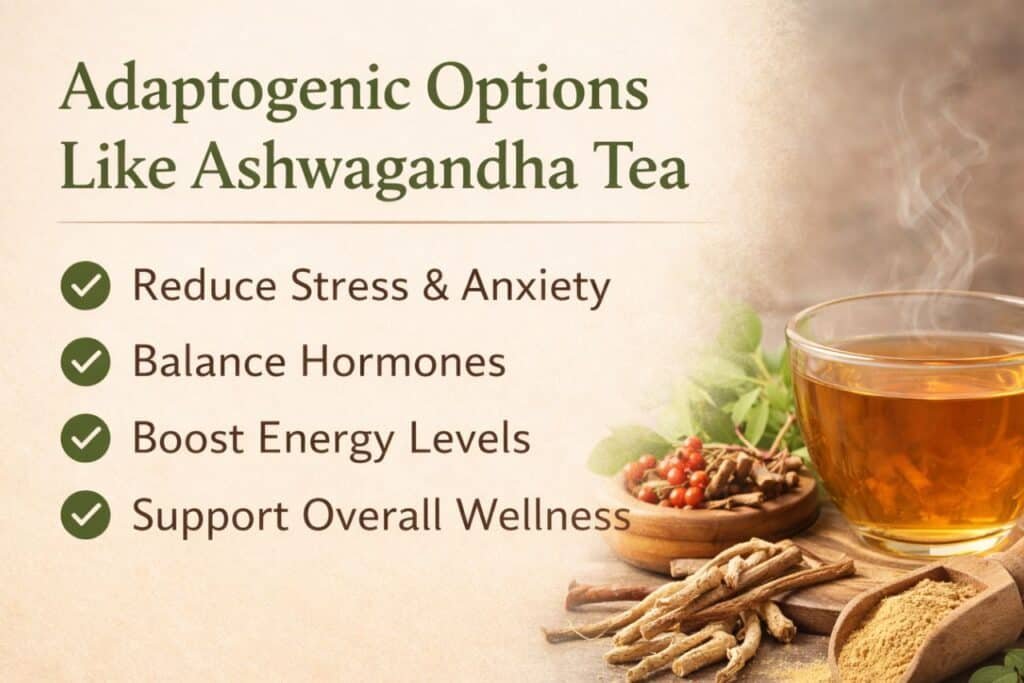
Ashwagandha develops strength in weeks. It reduces cortisol, according to research, by 23 percent.
Rhodiola fights fatigue without sedation.
You keep at your toes when the days are on.
Root-based, a little palliative–just right to the professionals.
How to Brew the Perfect Stress Relief Tea
Brewing is as important as selection. Compounds are killed by wrong temperature.
Bags should be avoided in favor of loose leaf. Towards 1 tsp of 8 oz of water.
You are the one who controls the strength. Lengthen the steep to bolder calm.
Cover during brewing to trap volatiles.
Step-by-Step Brewing Guide
Boil fresh water, then cool 1-2 minutes.
Add herbs to a mug or infuser.
Pour water over leaves; steep 5-7 minutes.
Strain and sip slowly—mindful breathing amplifies effects.
Best Times and Pairings
Morning: Green tea and L-theanine to achieve clear focus.
Afternoon: Peppermint to fight off.
Evening: Sleep blend of Valerian.
Combine with deep breathing or writing.
Customization Tips for Beginners and Experts
Beginners: Start with single-herb teas.
Experts: Mix ashwagandha, holy basil, and lemon balm.
Track effects in a journal.
Adjust ratios based on tolerance.
Benefits of Daily Stress Relief Tea Rituals
A stress relief tea can become a routine and you will change your life. It builds resilience.
You have more concentration, improved mood, and less stress headache.
In the long-term, it helps in the maintenance of the heart as it normalizes blood pressure.
The ritual has support by science. Neuroplasticity improves the ability to be calm on a daily basis.
Mental Health Boosts
Cuts anxiety by a quarter in those who use it regularly.
Enhances the quality of sleep- critical to stress recovery.
Enhances emotional regulation.
Less mood swings reported.
Physical Perks You’ll Feel
Reduces inflammatory rates such as CRP.
Relieves stress related digestion.
Maintains the immune process through antioxidants.
Have drinks and unwind.
Potential Side Effects and Precautions
Most people can take stress relief tea. But check interactions.
Pregnant? Skip ashwagandha. On meds? Consult your doctor.
You keep safe by beginning slack. One cup per day maximum at first.
Allergies to ragweed? Avoid chamomile.
Who Should Avoid Certain Teas
Individuals with low blood pressure: Do not take heavy tranquilizers.
Amplified drowsiness: be on the lookout among sedative med users.
Always find suppliers with good reputations.
Conclusion:
A simple and strong approach to stress is the stress relief tea which can be used to calm the tension of everyday life. You have seen the science, the best tips and hints about brewing, now use them. Chamomile tonight, create the ritual, and stress will disappear. You will be grateful to your mind and body. Brew up calm today!
FAQ:
Which is the most appropriate stress relief tea?
Chamomile is perfect, mild, efficient and generally found in most places. It does not put on too much.
What is the mechanism of action of stress relief tea?
Apigenin is one of the compounds that prevent stress signals. Research demonstrates the decrease 20-30% under the frequent consumption.
Is it possible to take stress relief tea on a daily basis?
Yes, most people can take 2-3 cups a day. Rotate combinations do not tolerate.
Which are the ingredients of anti-stress herbal tea that are the best?
The first ones are chamomile, lavender, ashwagandha and L-theanine. They approach the anxiety on the root cause.
Is stress relief tea effective in regard to sleep?
Yes, absolutely, valerian and passionflower increase GABA to achieve quicker and deeper sleep.