
Introduction
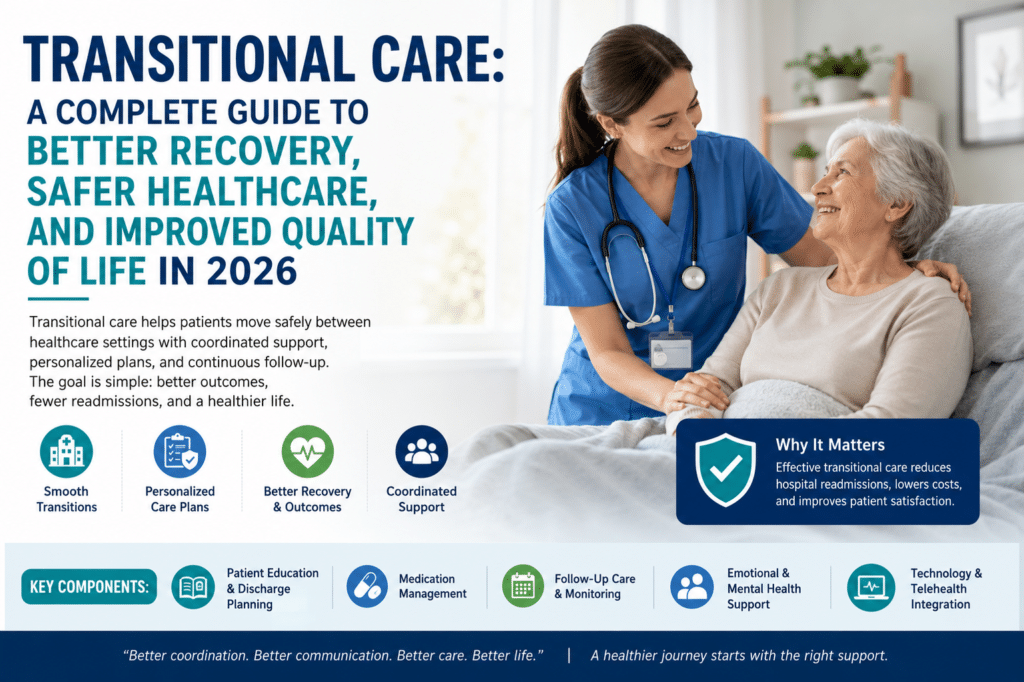
Find out how transitional care facilitates a successful recovery and provides the necessary support for patients who transition across different healthcare environments.
It is easy to feel inundated after leaving the hospital. Readjusting to life while managing symptoms, making follow up visits, and coping with changes in medications, proves to be challenging for many. Most often, without the necessary aid, complications occur, or the patient is readmitted. This is exactly where transitional care is needed.
Transitional care is a safe passage program from one healthcare setting to another. It integrates services from hospitals, rehabilitation centers, nursing facilities, and home care. The objective is to enhance the recovery process, minimize stress, and eliminate problems that could have been prevented.
In 2026, more emphasis will be placed on patient-centered care in healthcare systems, as well as on care that enhances wellness in the long run. To assist patients better, transitional care now incorporates technology, tailor-made care, and partnerships with diverse health care teams.
Whether you are a patient, caregiver, healthcare worker, or simply interested in healthy living, understanding transitional care can help you make smarter healthcare decisions. This guide explains how transitional care works, why it matters, and how it improves health outcomes for people of all ages.
What Is Transitional Care?

Transitional care is the management and continuity of care that occurs when a patient shifts from one location to another. Transitions can take place from:
– Home to and from the hospital
– Hospital to and from a rehabilitation center
– Home to and from a nursing facility
– A specialist to and from their primary care provider
Transitional care ensures the safety of the patient and the effectiveness of the health services administered during the recovery process. The primary goal of a transitional care program is to manage the recovery process. This encompasses the communication of care, management and reconciliation of medications, care instruction delivery, and support and services post-care.
Transitional care practitioners can be inclusive of:
– Medical practitioners
– Nursing practitioners
– Pharmaceutical practitioners
– Physical therapy practitioners
– Social work practitioners
– Care coordination practitioners
Synchronized efforts of the practitioners translates to a successful recovery for the patient with minimal health-compromising incidents.
Why Transitional Care Is Important
Transitions from care leave patient’s health to be vulnerable. Misunderstanding discharge instructions, not taking medications, and not going to scheduled follow-ups are common issues. Poor transitions make patient re-hospitalization likely.
Transitional care provides a formalized approach to recovery. It allows patients to leave a facility with a full understanding of their care and recovery processes.
Some benefits of transitional care are:
– Get patients to stop returning to the hospital
– Improved understanding of and adherence to medications taken
– Patients get healthy faster
– Patients more happy with their experience
– Spend less of everyone’s money
– Providers talk to each other more
Transitional care is more important for older adults and patients with chronic disease because they usually need more attention and a more hands-on approach.
Key Components of Effective Transitional Care
Patient Education and Discharge Planning
Discharge planning is integral to transitional care. Before patients exit the hospital, they must be instructed on medications, diet, therapy, and signs to watch out for.
Healthcare providers also educate the family and the primary caregiver. This provides an understanding of what the patient is going through and helps minimize confusion at home.
Proper discharge planning is inclusive of:
– Instructions for recovery
– Medication schedule
– Follow-up visit information
– Information for emergencies
Recovery is more successful for patients who take the time to understand their care plans.
Medication Management
Medication mistakes happen after a leave from the hospital, often occurring because a patient takes the wrong dose or takes medications in the wrong combination.
Risks can be moderated through transitional care programs that help clarify and answer questions about new prescriptions. Nurses and pharmacists help by instructing new medications, including information on the proper timing and course for each medication.
When managing medications, the following steps may be taken:
– Reviewing previously taken medications as well as newly prescribed ones
– Recognizing side effects that may occur with combination of the new and old medications
– Streamlining the schedule in which medications are to be taken
– Evaluating and recording the patients adherence to the schedule
When these steps are taken, safety and health of the patient and the hospital both stand to benefit. Additional complications are therefore avoided.
Follow-Up Care and Monitoring
There are many benefits to follow-up appointments in the hospital. Recovery can be tracked and potential problems can be identified.
Digital health tools for remote monitoring are used in many transitional care programs now. With the aid of telehealth and mhealth, patients can stay in touch with their care providers.
Services usually provided for follow-ups are:
– Phone checks
– Video calls
– Home visits
– Sign monitoring
These tools and services provide patients the ability to remain connected and build rapport with their care team and make it seem like they never even left the hospital.
Who Needs Transitional Care?
Older Adults
Older people often suffer from multiple health issues, requiring complex medication routines. They often have multiple health and safety issues like risk of falls, hospital readmission, and infection.
Transitional care is designed to help those seniors who need added care after surgery, illness, or injury. Care coordinators assist with rehabilitation, as well as time and medication management.
Transitional care also offers help to family caregivers by providing direction as well as emotional assistance during the recovery.
Patients With Chronic Diseases
There are many chronic issues a person can have, like diabetes or COPD. These issues require long-term management.
Transitional care is designed to help patients maintain reliable health post-hospital stay. This care is more attentive and adaptable to the needs of the patient.
This kind of care is better for patient longevity and reduces the need for emergency care.
Surgical and Rehabilitation Patients
Patients needing support after surgery or physical trauma may need rehabilitation therapy and help at home.
Transitional care integrates physical therapy, occupational therapy, and mobility and wound care assistance. This helps patients heal and become independent again in a shorter time.
Transitional Care and Mental Health
Mental health is an essential piece of the recovery puzzle. Anxiety, stress, and depression are common after the hospital.
Mental health services are increasingly incorporated into transitional care programs. During recovery, emotional challenges are addressed by counselors, psychologists, and other mental health professionals.
They offer:
– Behavior therapy
– Emotional counseling
– Stress management
– Support groups
While mental health services help recovery, mental wellness improves quality of life.
The Role of Technology in Transitional Care
Telehealth and Virtual Care
Telehealth has changed how some types of care are provided. Patients can meet health professionals right from their homes on a computer or cellphone.
Care from a distance provides services to those living far out where healthcare isn’t so readily available. It can also cut the burden of having to travel out full of appointments by providing services right from home.
Telehealth services include:
– Video appointments
– Symptom monitoring
– Medication reminders
– Patient education
These services make healthcare easy and connected.
Electronic Health Records (EHRs)
Electronic health records facilitate communication for all members of healthcare teams. They allow doctors, nurses, and specialists to access patient records, medications, and treatment plans.
Information sharing increases the accuracy of care and reduces the number of errors. It improves the coordination of care, particularly during care transitions.
By 2026, innovative healthcare technology will enhance safety and efficiency of transitional care.
Challenges in Transitional Care
While transitional care has its advantages, it also has its challenges.
Some are:
– Unsatisfactory communication among care providers
– Inadequate medical resources
– Restrictions in coverage
– Insufficient caregiver backups
– Patient disorientation regarding care plans
Healthcare systems are tackling these challenges using improved technology and better communication and coordination between care providers, and also focus on the education active engagement of patients.
From a global perspective, the focus on ensuring healthcare is both accessible and affordable is a work in progress.
How to Improve Transitional Care Outcomes
Patients and their support systems also have a role in enhancing recovery and improving the quality of healthcare received.
Some strategies that can be adopted to achieve this include:
– Keeping a current list of medications
– Asking questions when about to be discharged
– Early booking of post discharge appointments
– Keeping a close watch on symptoms
– Using technology to remind about medication timing
– Keeping in touch with the healthcare providers
Being proactive is proven to help reduce complications and promote fast and easy recovery.
Furthermore it is the responsibility of the healthcare providers to have communication, empathy and make a personalized plan of care.
Conclusion:
Transitional care is essential aspect to the healthcare of the current era. It allows care to be taken across the various points of the care continuum, hospital, rehab, home, etc. while minimizing the risks of fallout and maximizing improving the speed of patient recovery.
In 2026 the evolution of transitional care continues to grow. Technology, telehealth, and patient-centered care are some examples of medical care innovations that have incorporated elements of transitional care. From managing medications to providing emotional support, care innovations have improved patient health and the safety and quality of the service.
Transitional is essential to the understanding of navigating healthcare. Whether you are on the road to recovery following an operation, trying to manage an illness that just won’t go away, or taking care of a family member or friend, the knowledge of transitional care empowers you to manage the complexities of healthcare. By following the proper communication, engagement, and supportive elements, the patient is better positioned to have a safe recovery and live a healthy new life.
FAQs
What is the focus of transitional care?
The focus of transitional care is to promote safety and efficiency of healthcare transitions to/from hospitals, rehabilitation centers, and home care while minimizing complications and hospital readmissions.
Who is most in need of transitional care?
Transitional care is specifically of most value to older adult clients, clients with chronic diseases, clients who have had surgical procedures, and clients who are recovering from serious illnesses.
How does transitional care impact hospital readmissions?
Transitional care impacts hospital readmissions through improvement in the management of prescriptions, education of the patients, provision of post care follow up, and enhancement of the interactions among various care providers.
How does telehealth offer transitional care?
With telehealth, clients have the opportunity to be provided with medical care, virtual sessions, support for monitoring symptoms, and other medical advice, all in the comfort of their home.
Is transitional care aimed at older adults only?
No, transitional care focuses on clients of all ages who need assistance with healthcare during recovery, movement, or interaction with various healthcare environments.