
Meta Description:
Get to know the benefits of ACT therapy to mental health. Its principles, benefits, and how it can assist you in accepting life challenges and living it fully is quite understandable.
Understanding ACT Therapy: A Revolutionary Approach to Mental Health
The ACT Therapy (Acceptance and Commitment Therapy) is a new form of therapy that involves a combination of mindfulness or behavioral modifications and value-based actions to foster mental health. In contrast to the conventional treatment methods, which are aimed at regulating the thoughts and emotions, ACT allows the acceptance. Discomfort allows people to have more satisfying lives, even when they face anxiety, stress, or depression.
Be it emotional difficulties or simply the need to improve your overall well-being, ACT therapy offers the means of becoming resilient, gaining clarity, and living in the authentic sense. This is a detailed guide to the principles of ACT, the benefits proved by its use, and the way it can transform your life.

What is ACT Therapy?
The ACT therapy is aimed to make people psychologically flexible. It does not emphasize the prevention of painful thoughts or feelings, but it teaches acceptance of such experiences. The act will motivate you to live according to personal values and thus be devoted to do things that result in a useful life.
1. The ACT Therapy Main Principles.
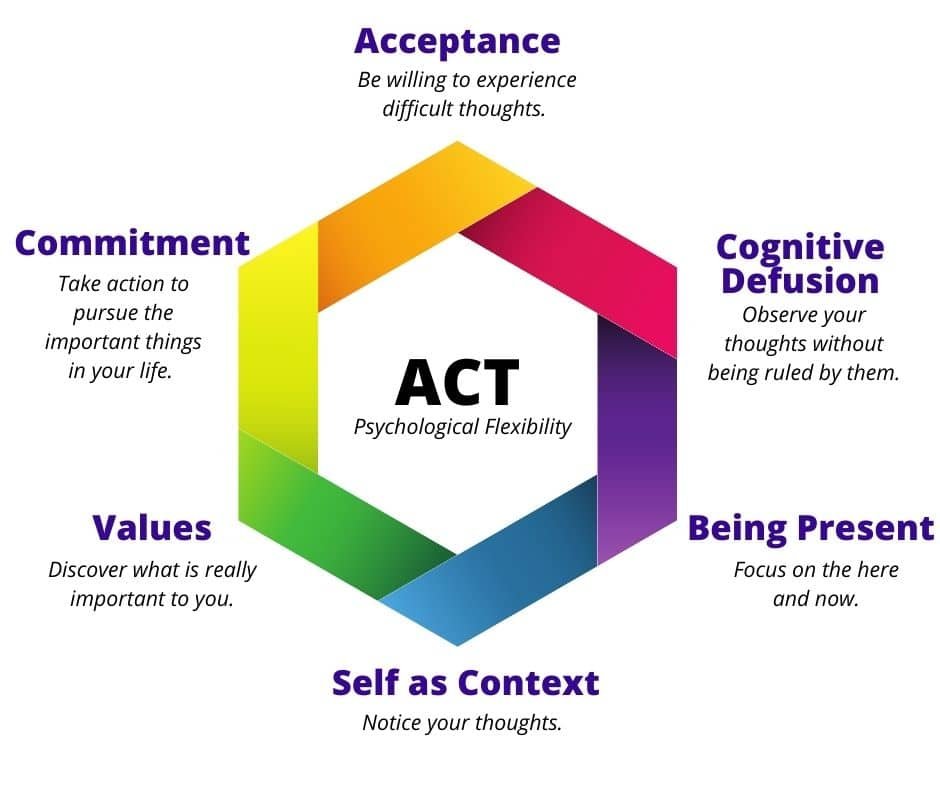
ACT is anchored on six fundamental processes that make people interpret and regulate their thoughts and emotions:
• Acceptance: Be ready to accept painful thoughts and feelings without making any attempt to suppress or transform them.
• Cognitive Defusion: Uncouple with unhelpful thoughts by considering them images, not facts.
• Mindfulness: Learn to be aware of what you are experiencing at the present without being judgmental.
•Self-as-Context: See yourself as spectator of your thoughts and not determined by them.
• Values Clarification: Find out what the important things are to you and do them consistently in line with their values.
• Action: Do something significant, even when it is frightening or unpleasant to do so, in order to live in line with your beliefs.

2. Why Choose ACT Therapy?
ACT therapy is more than treating symptoms: it has special advantages that can be studied:
• Strong will: Developed with the support of ACT, you will have the capacity to recover your setbacks by embracing and making peace with your emotional pains the next time they happen instead of blocking them.
• Ensures You Live Your Life Authentically: ACT can make you make decisions that are based on what is important to you, by linking you to your values.
• Delivers Lasting Benefits: ACT does not only aim to reduce the symptoms but to achieve lifelong improvement and meaningful living.
Benefits of ACT Therapy
ACT is an efficient treatment of people struggling with a broad scope of mental health issues. The following are some of its main advantages:
1. Assists in relieving Anxiety and Stress.
ACT will help you to accept and observe anxious thoughts rather than struggle with them. This will go a long way in lessening the effects of the anxiety and stress and you will be in control of your life again.
2. Improves Mental Clarity
Through mindfulness and living in the present, ACT therapy ensures the clutter in the mind is minimized. This contributes to a higher level of clarity of mind, improved decision-making and more balanced outlook on life.
3. Enhances the Desire to change what is good.
ACT helps a person to act in a committed manner to achieve something despite the fear or discomfort attached to it. It builds long-term motivational change by balancing the actions with values.
How ACT Therapy Works: The Process
ACT is a very systematic process and involves the application of different methods that are aimed at assisting you to develop the skill needed to be psychologically flexible. Some of the major strategies employed in the therapy include these:
1. Mindfulness Practices

Mindfulness activities assist one in remaining in the moment and non-judging thoughts and feelings. This decreases affectivity and develops a feeling of control.
2. Behavioral Activation
ACT focuses on action, even when you are in doubt or out of your comfort zone. Through behavioral activation, people generate momentum in their lives as well as result in the positive emotion.
3. Metaphors and Exercises
ACT therapists tend to apply imaginative metaphors to present complex ideas, as a way of enabling people to look at things differently. The abstract concepts become more realistic and familiar with these exercises.
ACT Therapy for Specific Mental Health Conditions
ACT is universal and capable of assisting people having different psychological issues. The following are some examples of how ACT would be particularly effective in treating some conditions:
1. Depression
The way ACT can be of use is through dealing with avoidance behavior that is normally linked to depression. People can rediscover the sense and happiness by learning to tolerate the negative feelings and concentrate on the value-oriented behavior.
2. Chronic Pain
ACT has been proven to be very useful in the treatment of chronic pain. It dwells on the ability to embrace pain and divert attention to it, hence people are able to live a complete life despite their constant physical pain.
3. Post-Traumatic Stress Disorder (PTSD).
ACT helps to decrease emotional load of trauma through its teaching of acceptance and mindfulness. This assists people to deal with their memories and experiences less distressingly.
Conclusion: Embrace ACT Therapy for a Fulfilling Life
The ACT therapy is a refreshing method of mental health since it promotes acceptance, mindfulness, and action. Feeling anxious, depressed or just seeking to be more authentic in life, ACT can assist you to discover your potential in terms of psychological flexibility and resilience. Turn your life around and make the initial step to a healthier and fulfilling life by embracing ACT therapy.
Frequently Asked Questions (FAQ) About ACT Therapy
1. How long does ACT therapy take to work?
ACT therapy can show results in as little as 6-12 sessions, depending on the individual’s needs and the severity of their challenges.
2. Can ACT therapy help with addiction recovery?
Yes, ACT can be effective for addiction recovery. It encourages individuals to accept cravings and negative emotions while taking committed actions toward a life aligned with their values.
3. What is the difference between ACT and CBT?
While both therapies help with emotional well-being, ACT focuses more on acceptance and mindfulness rather than changing negative thoughts, as is the case in CBT (Cognitive Behavioral Therapy).
4. Is ACT suitable for children or adolescents?
ACT can be adapted for younger individuals. By using simple language and engaging activities, ACT therapists can help children manage their emotions and develop resilience.
5. Can ACT be used alongside other therapies?
Yes, ACT can complement other therapeutic approaches, such as CBT or medication, to enhance overall treatment outcomes.